
March 16, 2026
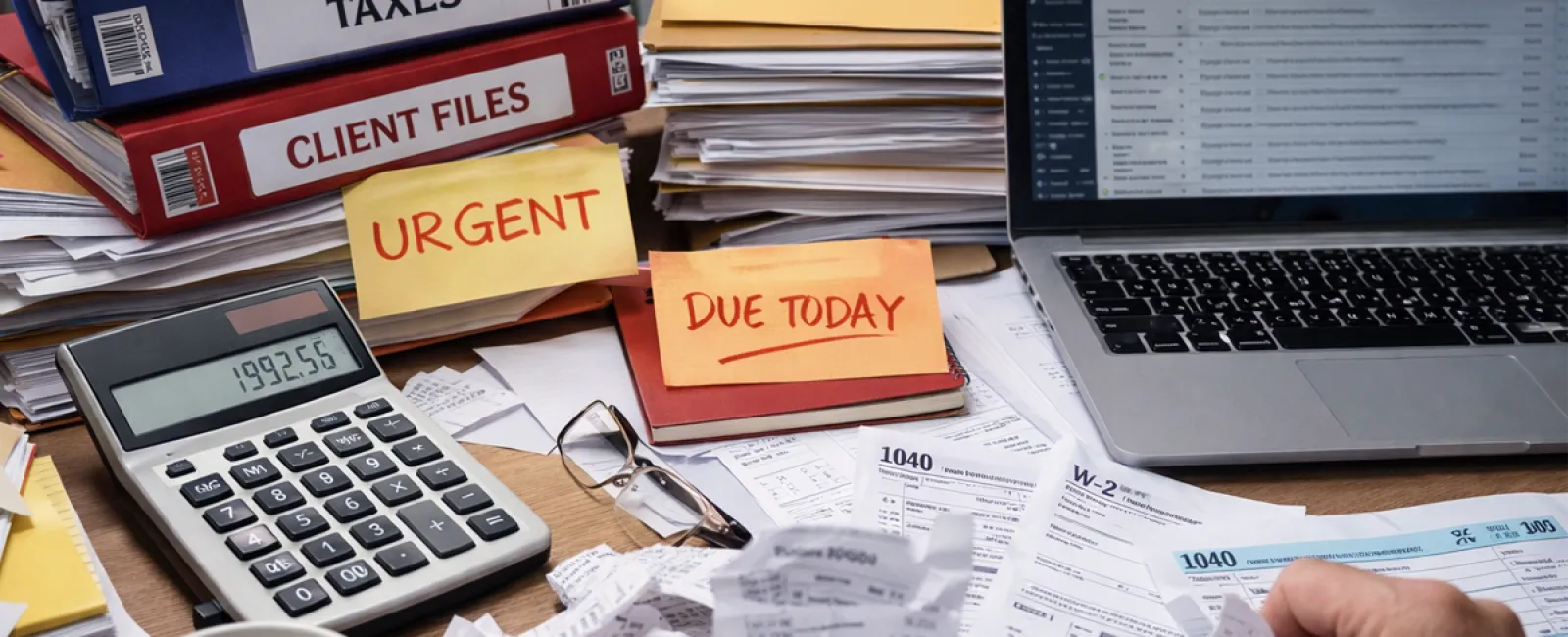
It's March—tax season surge has begun.
Your accounting team is overwhelmed. Your bookkeeper is racing against time. Deadlines are looming, and inboxes are flooded with emails.
Everyone is focused on simply surviving the month.
This scenario isn't surprising to you.
But hackers are well aware of this rush too.
Security experts report a dramatic increase in phishing attacks around tax season, with March seeing about 28% more tax-related scam emails than calmer periods. These scams are subtle and blend seamlessly into normal business communications, striking when vigilance is lowest.
This spike isn't random.
It's strategic timing.
Understand what lies ahead and learn four straightforward ways to protect your business from becoming an easy target.
The Overwhelmed Business Network
Here's what is often overlooked:
Hackers don't only aim at accounting departments.
They exploit the disarray surrounding tax season.
During tax season:
- Clients hurriedly send sensitive documents
- Employees bypass usual checks trying to keep pace
- Requests like "just send me that file" replace cautious protocols
- Verification steps get skipped because everyone's overwhelmed
The entire workflow speeds up.
And with speed comes vulnerability.
Hackers target hectic environments, not calm, well-organized ones.
March is exactly that hectic period.
Recognizing Common Attack Techniques
This is no fiction.
Scams arrive as seemingly ordinary emails lining your inbox.
- An email from "your accountant" requesting W-2s again due to an error
- A message from a vendor announcing a bank account change needing update
- A DocuSign alert demanding immediate signature on tax documents
- An urgent note from "your CEO" on a business trip asking for quick help
None of these triggers suspicion.
They mirror typical business communications in March.
Which is why these scams succeed.
Understanding Why Busy People Fall Victim
This isn't blame.
It's human nature.
In the chaos of a packed inbox and tight deadlines, people often skim messages, make quick assumptions, and react impulsively.
Cybercriminals exploit this exact behavior.
Their emails are crafted for rushed eyes to overlook subtle discrepancies. They don't need you careless; they just need you distracted.
And March keeps everyone rushing.
Four Effective Strategies to Avoid Becoming a Target
The best news? You don't require complex defenses or large security teams to safeguard your business.
Adopting a few deliberate habits during busy tax months can drastically reduce risk.
1. Validate Payment Changes with a Call
If an email states a vendor's bank info has changed, don't reply electronically.
Instead, call a trusted phone number direct.
This simple habit blocks many costly fraudulent schemes.
2. Take Time Before Sharing Sensitive Data
Urgent emails should signal caution, not haste.
If requested for W-2s, tax forms, or financial files "immediately," pause to confirm.
Legitimate requests tolerate verification delays. Scams won't.
3. Double Check Urgent Requests Using Another Method
For emails marked urgent, verify via phone, text, or an internal message.
This quick step can prevent costly mistakes.
Real urgency withstands a brief pause; fake urgency does not.
4. Brief Your Team on Scam Awareness
Remind your staff that tax season is a prime time for scams.
Encourage them to slow down, double-check, and question anything suspicious.
Giving this permission now saves massive trouble later.
Key Takeaway
Tax time is stressful enough—don't add falling victim to scammers to that list.
These attacks aren't genius; they're perfectly timed to exploit rush and assumption.
They thrive on hurried decision-making and the pressure to push through March.
You don't have to overhaul your entire system.
Simply slowing down and verifying urgent requests can be the best defense.
Often, that's all it takes.
Assess Your Readiness This Busy Season
If your business already practices good security habits, fantastic.
If tax season drives reactive stress or you're uncertain how your team handles sudden requests, consider a complimentary 15-Minute Discovery Call.
No pressure, no gimmicks, just practical advice to spot habits that could prevent major headaches this season.
If this message doesn't apply to your business, kindly share it with someone who might benefit.
Click here or give us a call at 817-277-1001 to schedule your free 15-Minute Discovery Call.


